When it comes to earnings estimates (or guidance), companies like to set the bar low. It’s easier to clear the bar that way. It’s pretty much a corporate tradition at this point. So when they start raising the bar on themselves, it really gets our attention.
Here’s a little background on how this works. Before a company officially reports its earnings, management will often tell Wall Street what to expect. And here’s the thing—they almost always lowball it. By keeping expectations low, they make it easier to beat them later. That gap between what they say and what they actually deliver? That’s the guidance gap.
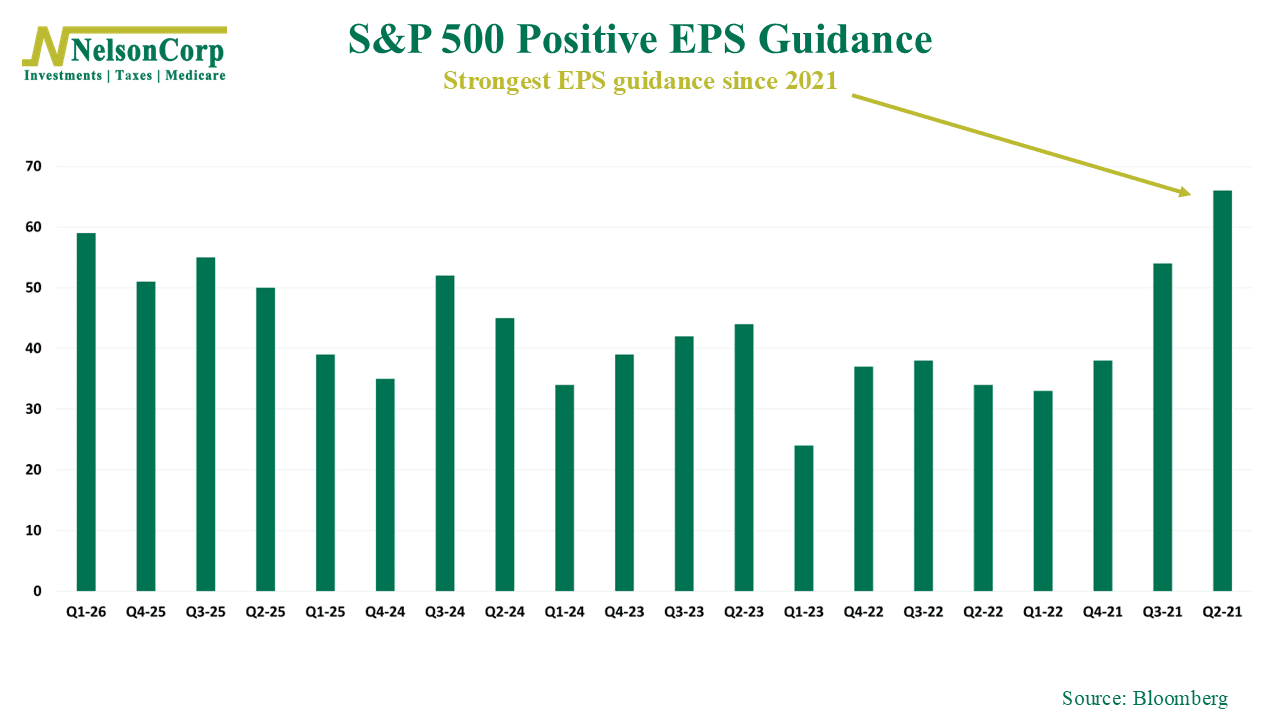
But right now, something different is happening. As this week’s chart shows, 66% of S&P 500 companies have issued positive EPS guidance heading into the quarter—meaning they’re actually raising their own bar. That’s the highest reading in five years and well above the historical average of around 42%.
What makes that wild is the backdrop. Oil prices are elevated, there’s an active conflict in the Middle East, and every other headline seems designed to make you nervous. Yet the people actually running these companies—who tend to know their business a lot better than cable news does—are raising their hands and saying things look better than expected.
The bottom line? When the headlines say one thing and corporate America says another, history suggests it’s usually worth listening to corporate America.
This is intended for informational purposes only and should not be used as the primary basis for an investment decision. Consult an advisor for your personal situation.
Indices mentioned are unmanaged, do not incur fees, and cannot be invested into directly.
Past performance does not guarantee future results.
The S&P 500 Index, or Standard & Poor’s 500 Index, is a market-capitalization-weighted index of 500 leading publicly traded companies in the U.S.