by NelsonCorp | Aug 27, 2026 | Indicator Insights
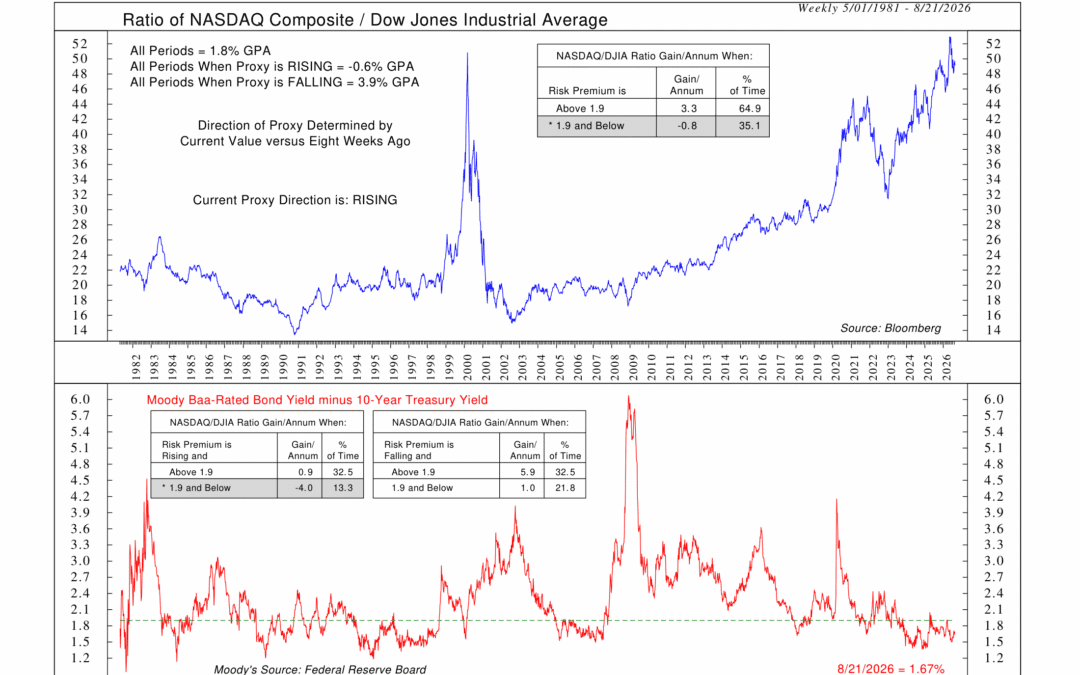
For this week’s indicator, I want to talk about market leadership. We tend to think about the stock market as one big thing. Either stocks are going up or stocks are going down. But underneath the surface, there is almost always a battle taking place between...
by NelsonCorp | Aug 20, 2026 | Indicator Insights
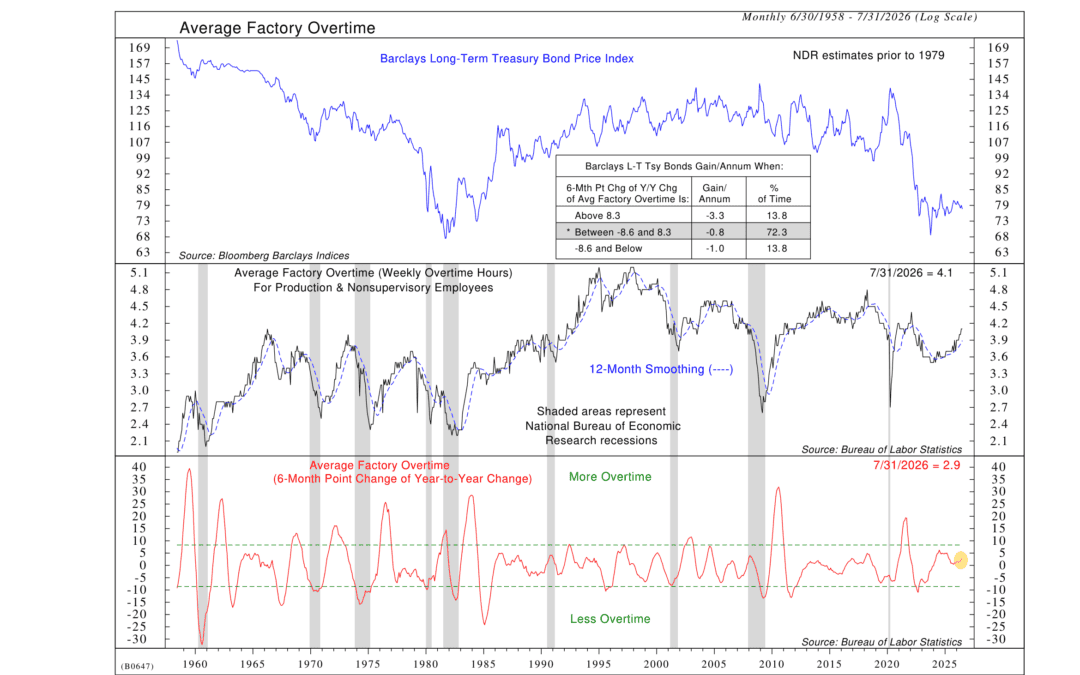
This week, I want to highlight a different sort of indicator than we usually talk about. It has to do with overtime work and how it relates to bond prices. Why overtime? Because overtime is something almost everyone understands. When business is good and demand...
by NelsonCorp | Aug 13, 2026 | Indicator Insights
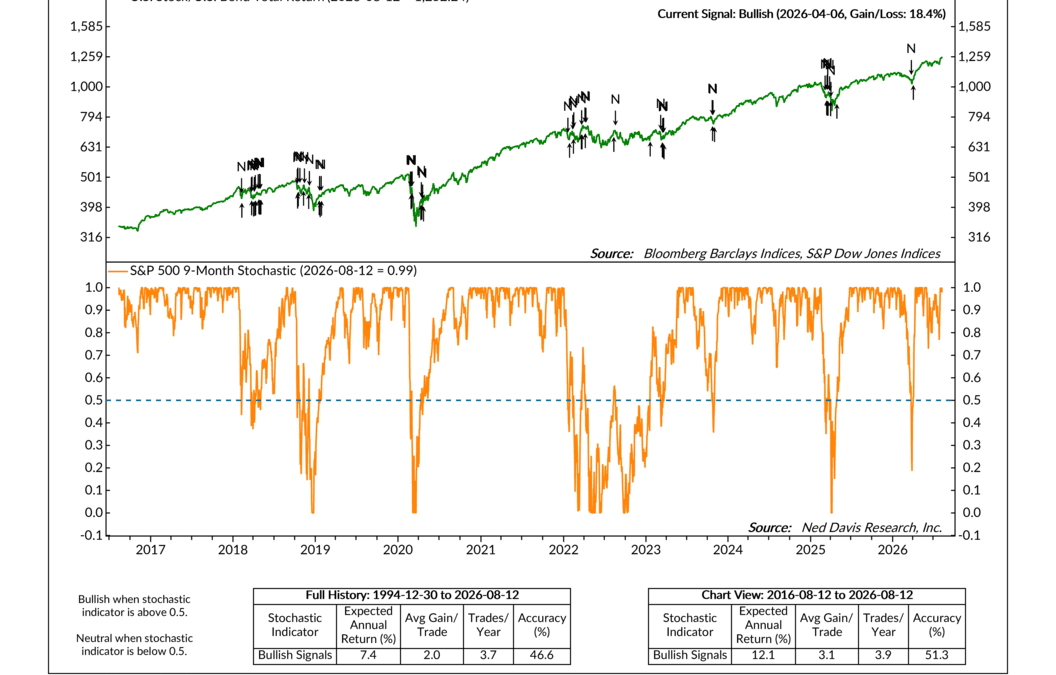
Stocks or bonds? It’s a simple question, but the answer isn’t always so simple. Most of the time, investors will want to own some of both. But when the evidence becomes strong enough, it can make sense to lean more heavily in one direction. So, how do we know...
by NelsonCorp | Aug 6, 2026 | Indicator Insights
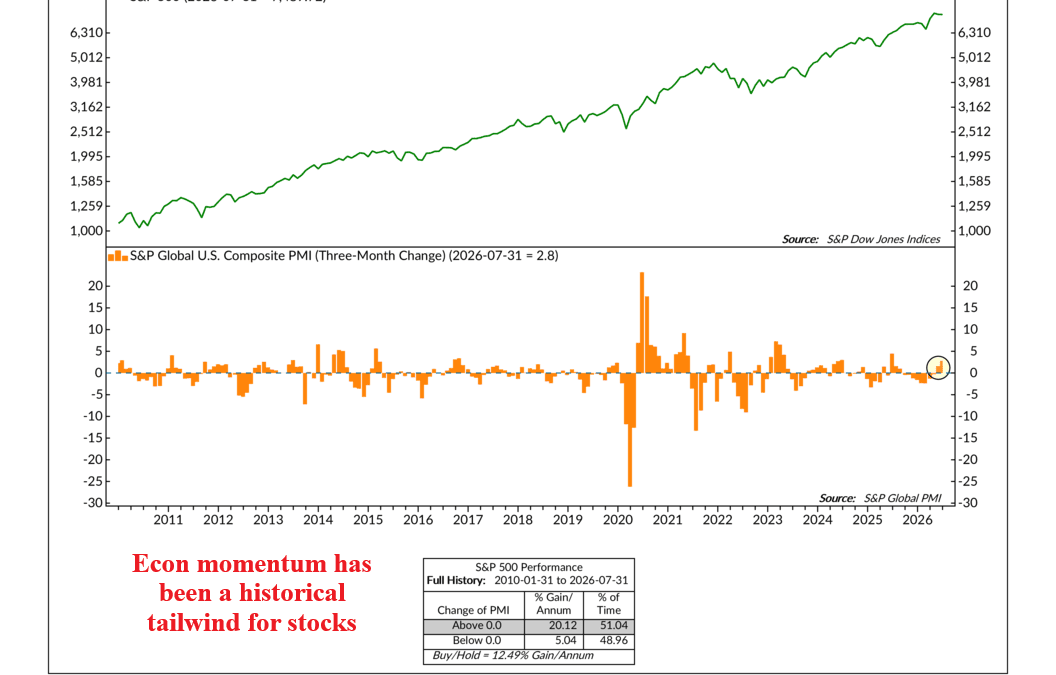
The stock market is not the economy. This is true. The two don’t always move together, especially in the short run. But we do find evidence that a strengthening economy can provide an important tailwind for stocks when conditions are right. When are conditions...
by NelsonCorp | Jul 30, 2026 | Indicator Insights
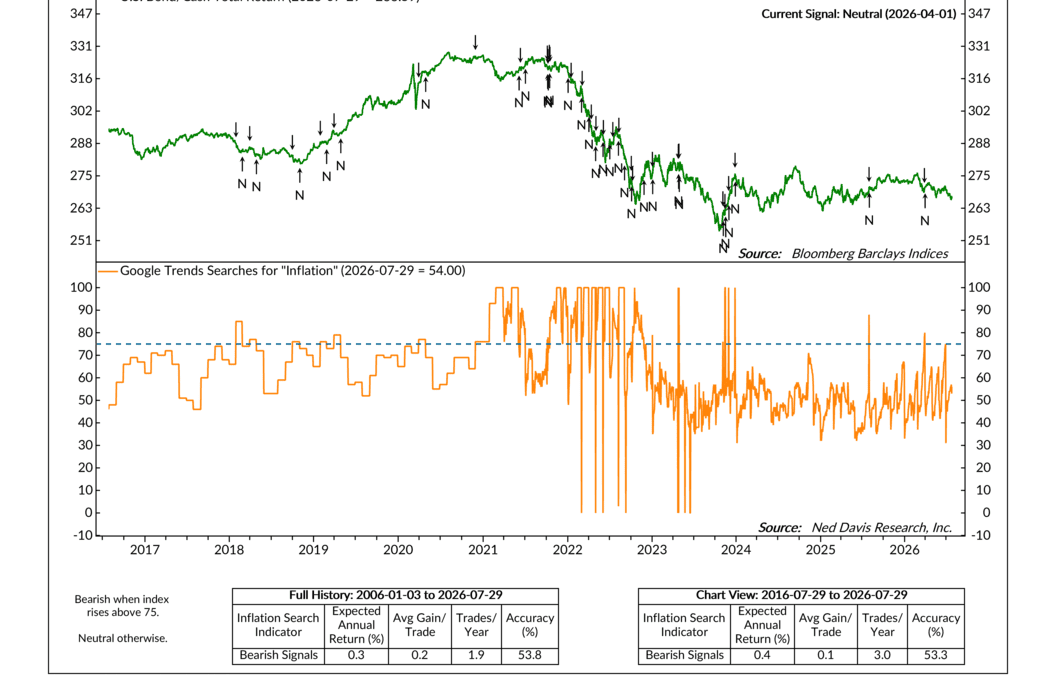
Bonds. They’re kind of boring, right? Well, at least compared to stocks, they can be. Bonds rarely make headlines. They don’t have flashy earnings reports. And they don’t usually deliver the eye-popping returns that attract investors to the stock...
by NelsonCorp | Jul 23, 2026 | Indicator Insights
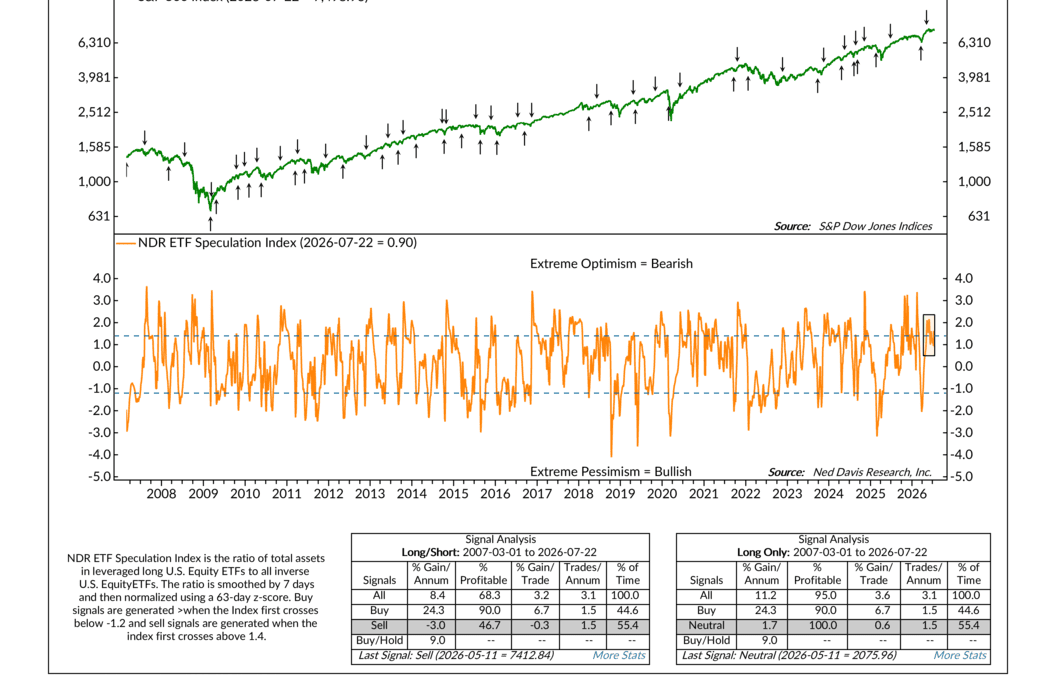
Speculation. Is it good or bad for the stock market? Sometimes, it can be good. It’s a sign of optimism. But, as we know, too much of a good thing can be bad. So how do we know we’ve reached that point? Well, that’s what this week’s indicator—the NDR...